The 5 Best Airline-Approved Dog Travel Crates (2026)
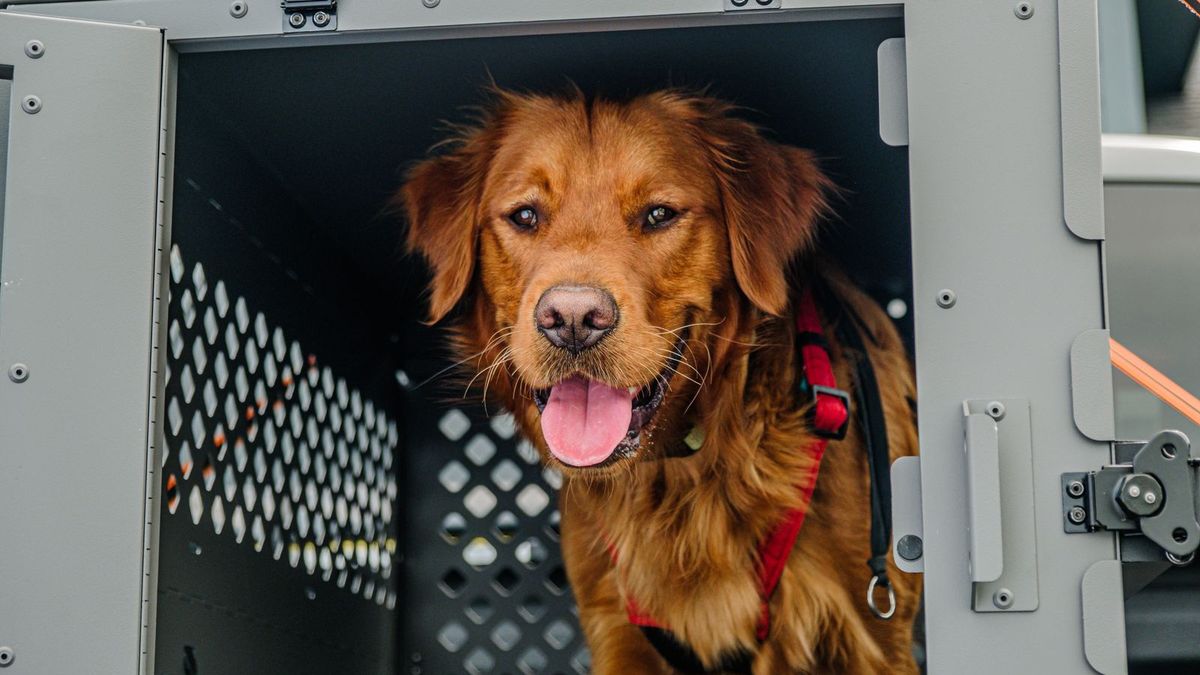
Here's the uncomfortable truth about flying with a dog: there is no such thing as a "pre-approved" airline crate. The check-in agent decides on the day, crate in front of them, rulebook in hand — and agents reject crates every single day for plastic door latches, missing ventilation holes, wheels left attached, or a dog whose ears brush the ceiling.
What you can do is buy a crate built to IATA Live Animal Regulations (the standard nearly every airline's pet policy copies) and size it correctly. We dug through IATA's container requirements, the published pet policies of ten major airlines, and hundreds of owner reports of acceptances and rejections. These five crates and carriers pass checks consistently — two for cargo, two for in-cabin, and one budget pick that needs ten minutes of prep.
Quick comparison
| Crate | Best for | Travel type | Sizes |
|---|---|---|---|
| Petmate Sky Kennel | Best overall (cargo) | Cargo hold | 21"–48" (7 sizes) |
| Gunner G1 | Maximum protection | Cargo / car | S–XL |
| Sherpa Original Deluxe | Best in-cabin | Under-seat | S–L (to ~22 lb) |
| SturdiBag Pro 2.0 | Flexible under-seat fit | Under-seat | S–XL |
| Petmate Vari Kennel | Budget cargo pick | Cargo (with prep) | 19"–48" |
Our top picks, reviewed
1. Petmate Sky Kennel
The Sky Kennel is the crate airline staff see most, and that familiarity is worth real money at check-in. Out of the box it ships with the things agents check first: metal bolt fasteners, a spring-locked steel door, ventilation on all four sides, clip-on food and water cups, and "Live Animal" stickers. Heavy-duty plastic shell, no wheels to remove, seven sizes up to 48". If you're flying a dog in the hold and want the shortest argument at the counter, this is the one.
- Meets IATA construction specs as sold
- Metal hardware and 4-side ventilation included
- Agents recognize it — fewer check-in disputes
- Still add corner zip ties (airline rule, not included)
- Big sizes are bulky to store at the destination
2. Gunner G1 Kennel
The Gunner G1 is the overbuilt option: double-walled rotomolded plastic, a crash-test pedigree (it's the crate that earns top marks in Center for Pet Safety testing), and a lifetime warranty. It costs several times a Sky Kennel and weighs more, which matters because airlines charge by crate-plus-dog weight. Buy it if your dog flies often, rides in a truck bed between flights, or if "strongest available" is the brief — and confirm your airline's door-spec requirements for international routes.
- Crash-rated construction, effectively indestructible
- Lifetime warranty
- Doubles as the safest car crate you can buy
- Expensive and heavy (raises airline fees)
- Overkill for a once-a-year flight
3. Sherpa Original Deluxe Carrier
For small dogs flying under the seat, the Sherpa Original Deluxe is the default for a reason: its patented spring-wire frame lets the rear half compress a couple of inches to slide under low seats, then pop back up so your dog regains headroom. Mesh panels on three sides, a fleece liner that machine-washes, and seat-belt/luggage strap pass-throughs. It's the carrier most airline staff have seen a thousand times — in-cabin, familiarity works in your favor too.
- Compressible frame fits tight under-seat spaces
- Washable liner, locking zippers
- Widely accepted; sizes to about 22 lb
- Soft floor sags with dogs near the weight limit
- Top-loading only through one end zip
4. SturdiBag Pro 2.0
The SturdiBag's party trick is its flexible pop-wire roof: it compresses to whatever height the under-seat space allows, then springs back taller than most carriers, giving cats and leggy small dogs genuine headroom between fittings. It's lighter than the Sherpa, has better airflow (mesh on four faces), and the divided interior straps keep a pet stable through turbulence. Frequent flyers with borderline-sized pets tend to end up here.
- Height-flexible roof fits almost any aircraft
- Very light — matters for carrier+pet weight caps
- Excellent ventilation
- Pricier than the Sherpa
- Less structured floor — add a rigid pad for heavier pets
5. Petmate Vari Kennel
The Vari Kennel is the Sky Kennel's cheaper sibling: same shell design, but it ships with plastic fasteners and fewer included extras. Swap the plastic bolts for a metal hardware kit (a few dollars), add cups, ties and stickers, and you have a crate that passes the same checks for noticeably less. It's the right call if the travel budget is tight and you don't mind a ten-minute upgrade session — but do the upgrade; plastic fasteners are the single most common crate rejection.
- Cheapest path to an IATA-compliant crate
- Same proven shell as the Sky Kennel
- Great as an everyday home crate between trips
- Needs metal-hardware swap before flying
- Dishes, ties and stickers sold separately
The sizing rule that gets crates rejected
Agents size-check with a simple test: the dog stands in the crate, and they look for clear air above the ears and room to turn. IATA's math is length of dog nose to tail-base plus half the leg length for crate length, and standing ear-tip height plus clearance for crate height. If you'd rather not do geometry at the pet store, measure your dog and use our free dog crate size calculator — it includes an airline-sizing section and flags when your dog sits between crate sizes (for flying, always round up).
Cargo checklist: what agents actually inspect
- Metal fasteners joining top and bottom halves — plastic wing-nuts are rejection #1. Keep a few spares in your carry-on.
- Releasable zip ties on all four door corners, added after the agent inspects the dog.
- Two dishes, reachable from outside — clip-on cups on the door, filled with ice rather than water so it doesn't slosh out during loading.
- Live Animal stickers + "This Way Up" arrows on at least two sides, your contact details taped on top.
- Absorbent bedding (a towel or whelping pad), nothing loose your dog can shred into a choking hazard mid-flight.
- No wheels. If your crate came with them, remove them and pack them in your luggage.
In-cabin vs cargo: the honest decision
If your dog plus carrier weigh under the airline's cabin limit (usually 8–9 kg), in-cabin is safer, cheaper and less stressful — full stop. For bigger dogs, cargo in a proper crate is routine and the vast majority of flights are uneventful; the real risks are heat (many airlines embargo pets in summer months) and layovers (book direct whenever possible). Acclimate your dog to the crate for two weeks before flying — feed meals in it, do short car trips in it — and skip sedatives, which airlines prohibit because they impair temperature regulation at altitude. If you drive more than you fly, a crash-tested car harness covers the road-trip side of travel safety.
Frequently asked questions
What makes a crate "airline approved"?
For cargo travel, airlines follow IATA Live Animal Regulations: rigid plastic or wood construction, metal (not plastic) bolt fasteners, a spring-locked metal door, ventilation on at least three sides (four for international), a solid leak-proof floor, and food/water dishes accessible from outside. No crate is pre-certified — the check-in agent approves or rejects on the day.
Can my dog fly in the cabin with me?
Only if dog plus carrier fit under the seat in front of you — in practice pets up to roughly 8–9 kg (17–20 lb) in a soft carrier around 18" long. Each airline publishes exact under-seat dimensions, and they vary by aircraft, so check the specific flight before buying a carrier.
How do I size an airline crate?
IATA's formula: the dog must stand without ears or head touching the ceiling, turn around fully, and lie down naturally. Agents commonly check for a hand's width of clearance above the standing dog. Measure nose-to-tail-base and floor-to-ear-tip, then add 3 inches — our free crate size calculator does the math for you.
Are zip ties on an airline crate required?
Most airlines require releasable cable ties on all four corners of the door after inspection, and many require them on the top-bottom seam bolts too. Bring a bag of them — agents rarely supply ties, and a missing tie is a common gate rejection.
Also read: our Dog Crate Size Calculator & Guide to nail the size before you buy, and the 5 best crash-tested car harnesses for the drive to the airport.